

Bladder Irrigation at Home
Sterile bladder irrigation when medically indicated, to support catheter patency and urinary care at home.
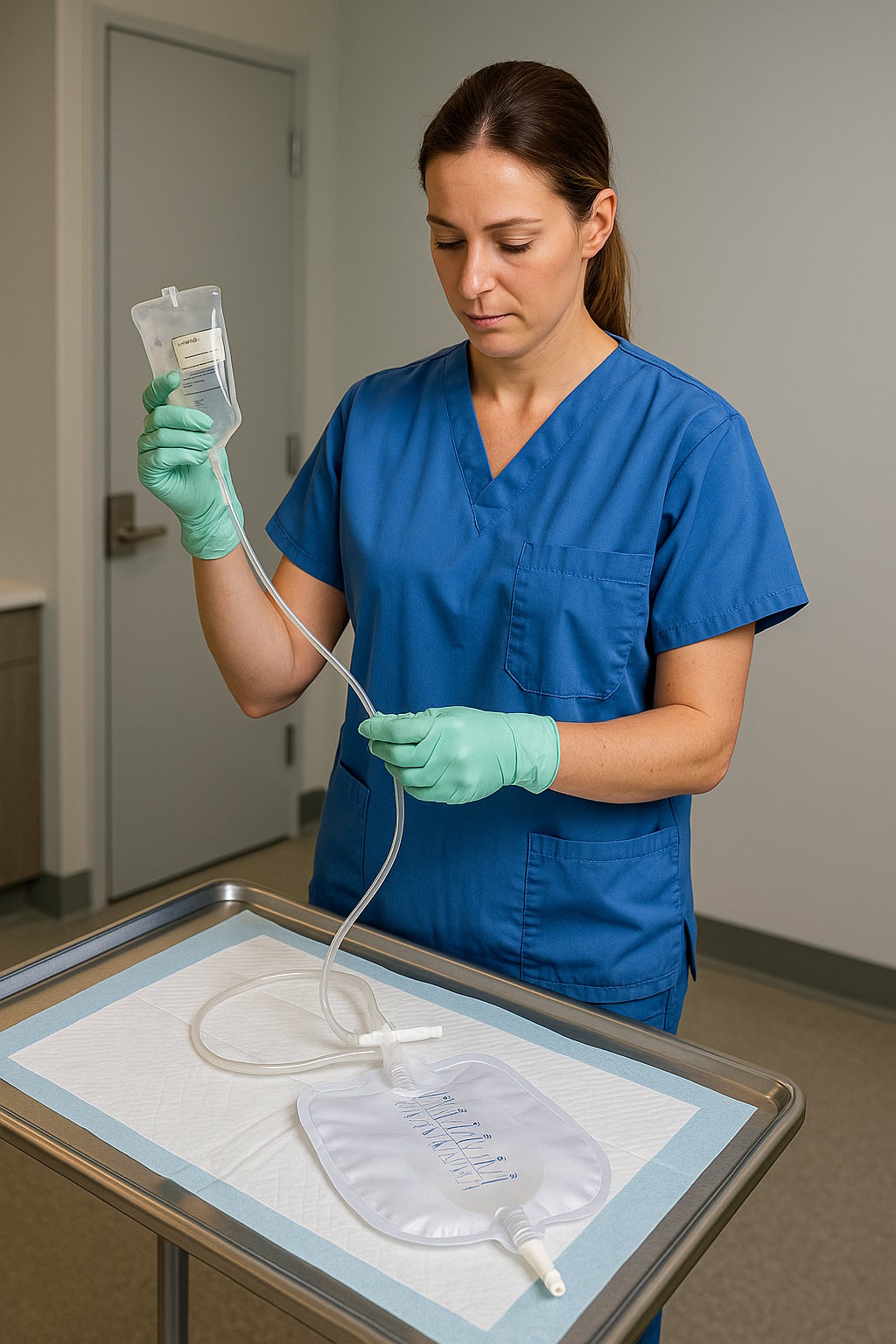
When bladder irrigation may be used
- For selected patients with an indwelling urinary catheter when medically indicated.
- To manage clots, debris or sediment according to a urologist’s instructions.
- As part of a specific urological care plan.
- Around catheter care or replacement when directed by the treating clinician.
Procedure
- Use of sterile gloves, equipment and prescribed irrigation solution.
- Assessment of the catheter and drainage system before irrigation.
- Slow, gentle irrigation according to the medical instruction.
- Cleaning of the connection points and secure reconnection of the drainage bag.
- Documentation of the procedure and relevant urine observations.
Benefits of appropriate catheter care
- Supports catheter patency when irrigation is medically indicated.
- Helps identify changes that may require medical review.
- Supports patient comfort and hygiene.
- Provides nursing monitoring of the urinary system and catheter.
Frequently asked questions
How often is bladder irrigation needed?
Only according to the treating clinician’s instructions. Routine irrigation is not appropriate for every catheterized patient.
Does the procedure hurt?
It should be performed gently. Pain, resistance or significant discomfort should prompt the procedure to stop and be assessed.
Can I do the irrigation myself?
Only if your healthcare team has specifically trained and instructed you. Otherwise, it should be performed by an appropriately trained healthcare professional.
Contact: 2531 556153 • 694 920 48 05 • 690 908 03 90 • irfankarayusuf@gmail.com • 78 Leoforos Iroon, Komotini, Greece.